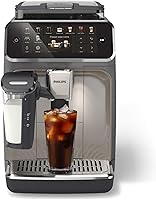
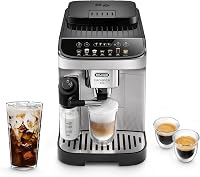
Philips 4400 vs 5500 LatteGo Compared: Which Is Better? (November 2026)
The Philips 5500 LatteGo is the better overall pick because it has 20 presets, while the Philips 4400 LatteGo has 12. Choose the 4400 for a simpler drink menu and the 5500 for more drink variety and customization.
On this page (12 sections)
- Philips 4400 vs 5500 LatteGo: what is the quick verdict?
- How do the Philips 4400 and 5500 compare side by side?
- Which machine gives you more coffee choices?
- Does the 5500 offer better personalization?
- Is the Philips 5500 easier to use than the 4400?
- Which Philips LatteGo machine fits a small counter?
- Do the two machines handle milk drinks the same way?
- What coffee can each machine use?
- How do setup and daily care compare?
- Who should buy the Philips 5500 LatteGo?
- Who should buy the Philips 4400 LatteGo?
- Philips 4400 vs 5500 LatteGo: which one should you choose?
The Philips 5500 LatteGo is the better overall pick in the philips 4400 vs 5500 lattego comparison because it offers 20 presets, compared with 12 on the 4400. The 4400 remains the smarter choice for a simpler menu, button controls and a shorter body.
Both machines are fully automatic espresso machines with a 1.8-liter capacity, a LatteGo milk system and 15-bar output pressure. Both can prepare hot drinks, iced coffee and hot water, while the 5500 gives you more ways to choose and save your routine.
We compared the drink menus, controls, profiles, dimensions, coffee input and cleaning features that matter in daily use.
Philips 4400 vs 5500 LatteGo: what is the quick verdict?
Choose the Philips 5500 for the widest drink choice and the Philips 4400 for a more focused routine. The higher-scored 5500 wins overall because its extra presets and profile capacity serve more household preferences.
The 5500 has 20 presets for drinks such as espresso, coffee, lattes, cappuccinos, iced coffee and hot water. The 4400 has 12 presets covering the same broad drink types, so the difference is menu range rather than the basic kind of machine.
Both machines automatically grind, tamp and brew at one touch. Both also let you adjust drink strength, volume and milk preferences, so the 4400 still gives you meaningful control over each cup.
The real choice is how much variety you want to see on the interface. If several people want different saved drinks, the 5500 has the stronger case.
If you mostly rotate through a few familiar drinks, the 4400 keeps the decision shorter.
How do the Philips 4400 and 5500 compare side by side?
The Philips 5500 leads on presets, profiles, controls and coffee-input flexibility, while both share a 1.8-liter capacity and LatteGo system.
| Feature | Philips 5500 LatteGo | Philips 4400 LatteGo |
|---|---|---|
| Drink presets | 20 | 12 |
| Capacity | 1.8 liters | 1.8 liters |
| Coffee input | Ground, Whole Bean | Beans |
| Controls | Touchscreen | Buttons |
| Saved profiles | Up to 4 | Up to 2 |
| Dimensions | 9.69 in D x 14.61 in W x 17.05 in H | 9.68 in D x 17.04 in W x 14.6 in H |
| Milk system | LatteGo, 3 parts | LatteGo, 3 parts |
| Output pressure | 15 bar | 15 bar |
| Operation | Fully Automatic | Fully Automatic |
The shared capacity means neither machine has an advantage in the amount of water it holds. Their layouts differ more than their depth: the 4400 is about 17.04 in wide and 14.6 in high, while the 5500 is about 14.61 in wide and 17.05 in high.
Measure the counter space in 3 directions. A low shelf may favor the 4400, while a narrow counter may favor the 5500.
Which machine gives you more coffee choices?
The Philips 5500 wins for drink variety with 20 presets. Its menu suits a household that moves between espresso, coffee, milk drinks, iced coffee and hot water.
The 4400 has 12 presets, which still covers the main drink styles many people use. Its smaller menu is an advantage when you want fewer choices between waking up and getting a cup started.
Preset count doesn't tell you the exact taste of every drink. It tells you how many built-in starting points the machine provides before you adjust strength, volume or milk preferences.
The 5500 makes more sense for a mixed routine. One person can choose a hot espresso, another can choose a latte, and someone else can select an iced coffee without relying on the same narrow group of presets.
For a household that repeats 2 or 3 drinks, the 4400's 12 presets are enough to keep the machine useful without paying attention to every available option.
Does the 5500 offer better personalization?
The Philips 5500 wins for shared households because it supports up to 4 profiles. The 4400 supports up to 2, which is enough for a couple or for one person who saves two different routines.
Both models let you adjust strength, volume and milk preferences. That means personalization is available on both, but the 5500 gives more people a place to save their choices.
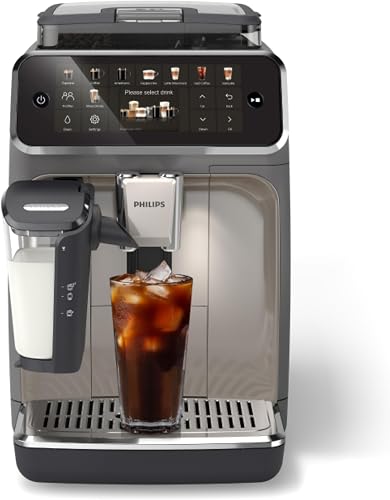
The 5500 also uses an intuitive color display and touchscreen input. That suits people who prefer selecting drinks and changing settings through a visual menu.
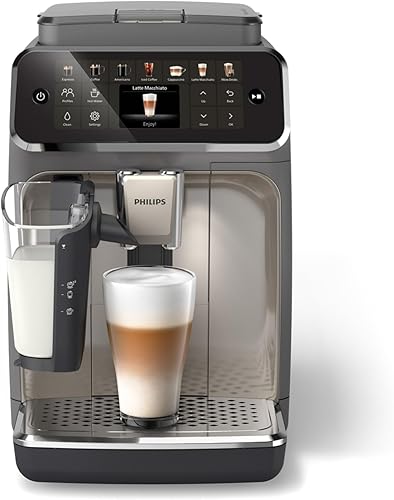
The 4400 uses buttons. Button controls can feel more direct when your routine is already familiar, especially if you don't want to move through a larger touchscreen menu.
The profile difference matters most when preferences vary by person. If one user wants a stronger espresso with less milk and another wants a larger milk drink, the 5500 has more room for separate saved settings.
Is the Philips 5500 easier to use than the 4400?
The 5500 is the easier choice for visual menu navigation, while the 4400 suits people who prefer physical button input. Neither changes the basic one-touch process.
Both machines automatically grind, tamp and brew. Both are ready to brew in 3 seconds with QuickStart, so the daily sequence is designed around selecting a drink rather than building one step by step.
The 5500's touchscreen puts its larger preset collection into a visual interface. That is helpful when you want to browse options or adjust several drink preferences from one place.
The 4400's buttons make the smaller menu feel more focused. You can choose from its 12 presets without needing the wider selection of the 5500.
There is no universal winner in control style. Choose the 5500 if a touchscreen and more visible options feel natural.
Choose the 4400 if you want button input and a shorter list of regular drinks.
Which Philips LatteGo machine fits a small counter?
The Philips 5500 is narrower, but the Philips 4400 is shorter. The right choice depends on whether your counter has more room side to side or above the machine.
The 5500 measures 9.69 in deep, 14.61 in wide and 17.05 in high. The 4400 measures 9.68 in deep, 17.04 in wide and 14.6 in high.
Their depth is almost the same. The important difference is the footprint shape: the 4400 takes about 2.43 in more width, while the 5500 takes about 2.45 in more height.
Measure from the counter to the underside of cabinets or shelves before choosing. Also leave enough working room to use the controls and handle the LatteGo system comfortably.
The 4400 may fit better under a low shelf. The 5500 may fit better in a narrow space where width is the main limit.
For more context on the larger machine's audience, read our Philips 5500 review, which focuses on who its LatteGo setup suits.
Do the two machines handle milk drinks the same way?
Both machines use the same 3-part LatteGo milk system, so the milk-system choice does not separate them. LatteGo automatically froths, foams and steams milk for drinks such as lattes and cappuccinos.
The system has no internal tubes or hidden compartments. It can be rinsed clean in 10 seconds or placed in the dishwasher, which gives both machines the same simple milk-care routine.
The difference is the menu around that system. The 5500 gives you 20 presets and more saved profiles, while the 4400 gives you 12 presets and up to 2 profiles.
If milk drinks are the reason you're comparing these models, both offer the same named LatteGo approach. Pick the 5500 when you want more drink presets around it, and pick the 4400 when the shared milk system already covers your regular drinks.
Keep the milk part separate from the coffee choice in your decision. The larger price tier, if you encounter one, should earn its place through the 5500's menu and profile advantages rather than a different LatteGo concept.
What coffee can each machine use?
The Philips 5500 is the more flexible choice because it accepts ground or whole bean coffee. The Philips 4400 is described with beans as its coffee input type.
Whole beans suit a routine built around the machine's automatic grinding process. The 5500 also gives you the option to use ground coffee, which helps when you want a different coffee format in the same machine.
That flexibility matters if your household switches between regular beans and a separate ground coffee. It also gives the 5500 a clearer advantage for people who don't want their coffee input limited to one format.
The 4400 remains a straightforward bean-based choice. If you plan to use whole beans every time, its coffee-input difference may not matter.
Both machines are fully automatic espresso machines with built-in grinding and 15-bar output pressure. The 5500's advantage here is input flexibility, not a different operating mode.
If you are also weighing a different Philips series, our Philips 3300 vs 5500 comparison explains where the 5500 sits in that broader range.
How do setup and daily care compare?
Daily care is broadly similar because both machines use LatteGo, QuickStart and automatic brewing. The main routine is choosing a drink, adjusting the settings you want and cleaning the milk system after use.
LatteGo's 3-part design gives you a short milk-care sequence. Rinse the parts clean in 10 seconds or use the dishwasher, as described for both products.
The 5500 includes a milk frother, while the 4400 includes a LatteGo storage lid. Those included components are different, so organize the milk parts around the item that comes with your chosen model.
The 4400 also has AquaClean, Aroma seal, guided descaling and a removable brew group listed among its special features. The 5500 has LatteGo as its listed special feature, along with the same general automatic brewing approach.
Use the controls to adjust strength, volume and milk preferences rather than changing several things at once. Save the settings that match each person's usual drink, especially on the 5500 where up to 4 profiles are available.
Who should buy the Philips 5500 LatteGo?
Buy the Philips 5500 LatteGo if you want the strongest all-round choice, 20 presets, a touchscreen and up to 4 profiles. It is the better match for households with different drink habits.
Its 1.8-liter capacity matches the 4400, so the reason to choose it is not a larger water capacity. The case is its wider menu and greater personalization.
The 5500 also accepts ground or whole bean coffee. That gives you another way to vary your routine without changing the type of machine.
Its narrower 14.61-in width helps when side-to-side counter space is tight. Its 17.05-in height requires more vertical clearance, so measure the space above the counter before ordering.
The 5500 is the best pick for drink variety and for a household where more than 2 people want their own saved preferences. Its score of 8.7 reflects that broader fit.
Who should buy the Philips 4400 LatteGo?
Buy the Philips 4400 LatteGo if 12 presets cover your routine and you prefer button controls. It is the more focused option for someone who wants automatic espresso drinks without the 5500's larger menu.
Its 1.8-liter capacity matches the 5500, and it also has the 3-part LatteGo milk system. You still get automatic milk frothing, foaming and steaming for common milk drinks.
The 4400 is shorter at 14.6 in high, which can matter under a low cabinet or shelf. It is wider at 17.04 in, so check the side-to-side space as carefully as the height.
It supports up to 2 profiles. That suits a couple or a single user who wants to save two different drink preferences.
The 4400 earns its score of 8 because it covers the core LatteGo experience while keeping the menu more compact. Choose it for simplicity, not for a larger capacity.
Philips 4400 vs 5500 LatteGo: which one should you choose?
Choose the Philips 5500 LatteGo as the overall winner. Its 20 presets, touchscreen, ground or whole bean input and up to 4 saved profiles give it the stronger fit for most households.
Choose the Philips 5500 when you want the widest drink menu, more personal profiles or a narrower machine body. It is also the better choice when your coffee routine includes both ground and whole bean coffee.
Choose the Philips 4400 when 12 presets are enough, button controls suit you better or the 14.6-in height fits your counter. Its 1.8-liter capacity and LatteGo system keep the core setup close to the 5500.
Both machines are fully automatic, ready to brew in 3 seconds with QuickStart and built around LatteGo milk care. The final decision rests on menu range, control style, saved profiles and the shape of your counter.
If you want to compare the wider brand choice before deciding, our De'Longhi vs Philips espresso machine guide looks at the two brands more broadly. For a lower Philips comparison, see Philips 3200 vs 2200 LatteGo.
For the philips 4400 vs 5500 lattego decision, pick the Philips 5500 LatteGo for the best overall fit, and choose the Philips 4400 LatteGo for a shorter, simpler machine with button controls.
Frequently asked questions
Do the Philips 4400 and 5500 use the same milk system?
Yes. Both use the LatteGo milk system, which has 3 parts with no internal tubes or hidden compartments.
The system can be rinsed clean in 10 seconds or placed in the dishwasher, according to the product information.
Can the Philips 4400 and 5500 use ground coffee?
The Philips 5500 accepts ground or whole bean coffee. The Philips 4400 is described with beans as its coffee input type, so the 5500 is the more flexible choice when you switch between whole beans and ground coffee.
Which Philips LatteGo machine has more saved profiles?
The Philips 5500 supports up to 4 saved profiles, while the Philips 4400 supports up to 2. The 5500 is the better match for a household where several people want their own saved strength, volume or milk preferences.
Are the Philips 4400 and 5500 the same size?
No. The Philips 4400 measures 9.68 in deep, 17.04 in wide and 14.6 in high.
The Philips 5500 measures 9.69 in deep, 14.61 in wide and 17.05 in high, so the 4400 is wider while the 5500 is taller.
Is the Philips 5500 worth choosing over the 4400?
Choose the Philips 5500 when its 20 presets, touchscreen and up to 4 profiles match your household. Choose the Philips 4400 when 12 presets are enough and its button controls and lower height fit your counter better.