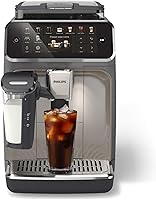
Philips 5500 Review: Who the LatteGo Suits (October 2026)
The Philips 5500 LatteGo suits households that want many one-touch drink choices, including hot and iced options, plus saved profiles. Its 20 presets make it more flexible than the 4400 and 3300, but a simpler model may fit better if you rarely use that range.
On this page (8 sections)
The Philips 5500 LatteGo suits households that want a broad one-touch drink menu, with 20 presets, adjustable drink preferences and saved profiles. If you mostly make a few familiar drinks, the Philips 3300 or 4400 may be a better fit because their menus are shorter.
The 5500's strongest case is flexibility: it covers hot drinks, iced coffee and hot water, while LatteGo handles milk drinks. We compared its listed features with the 4400 and 3300 to show where the extra choices can help.
What does the Philips 5500 review find?
The Philips 5500 is the most flexible choice of these three for drink variety and personalization. It offers 20 presets, adjustments for strength, volume and milk preferences, and up to four saved profiles.
Philips 5500 LatteGo: Best for a wide drink menu
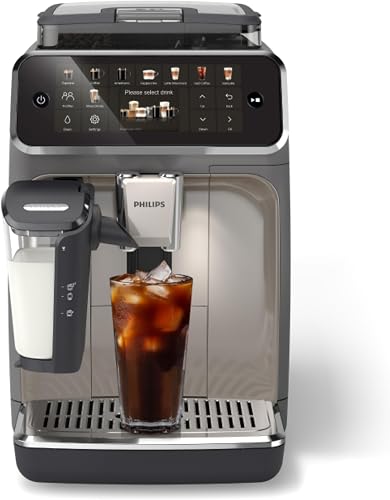
- 20 drink presets
- LatteGo milk system
- Up to 4 saved profiles
- QuickStart and SilentBrew
The 5500 is the most flexible of these three Philips LatteGo machines, with 20 presets and adjustable drink preferences. It suits a home where several people want different drinks and settings.
Pros
- Largest preset menu of these three
- Adjust strength, volume and milk preferences
- LatteGo has 3 parts and no internal tubes
- QuickStart and SilentBrew features
Cons
- Its wider menu may go unused in a home with a short list of regular drinks
- The available details do not specify every drink recipe or adjustment range
That breadth is useful when more than one person makes coffee or when your routine changes between espresso, milk drinks and iced coffee. The 5500 also includes QuickStart and SilentBrew; Philips describes the machine as ready to brew in three seconds and says SilentBrew is 40% quieter than earlier models.
Those are specific feature claims, not a promise that every drink will suit every taste or that the machine will be silent. If your household wants a small set of repeatable choices, the 5500's larger menu may not change your daily routine.
Our score weighs specs, features and buyer feedback against what you're shopping for. The 5500 earns 8.7 here because its menu and profile options serve varied routines, while buyers seeking fewer choices can spend their attention on a simpler model.
Who should buy the Philips 5500?
Choose the 5500 if several people share the machine, you like switching between drink styles, or saved preferences would make repeat orders easier. The available details say you can save up to four profiles and adjust strength, volume and milk preferences.
Consider another model if you only make black coffee or one milk drink. For a closer look across the range, see our Philips espresso machine comparison.
What do the 20 presets and profiles add?
The 5500's 20 presets give you more starting points than the 4400's 12 or the 3300's six. It offers hot choices such as espresso, coffee, latte and cappuccino, along with iced coffee and hot water.
Preset count alone doesn't tell you how much you'll enjoy a machine. Think of the drinks you make in a normal week, then ask whether the extra options fill a real gap or just make the menu longer.
Profiles matter most in shared homes. If people prefer different strength, volume or milk settings, saved preferences can reduce the need to adjust each drink from scratch.
The product details differ on the 5500's profile count: one feature bullet says up to four, while the description says up to two. Since that affects a buying decision, confirm the profile limit for the exact model before relying on four saved profiles.
The 4400 supports up to two profiles. The 3300 details describe adjustable strength, volume and milk level but don't specify saved profiles.
How does LatteGo affect daily cleanup?
LatteGo is a three-part milk system without internal tubes or hidden compartments, according to Philips. Philips says the parts can be rinsed clean in 10 seconds or washed in a dishwasher.
That design may appeal if you make milk drinks often and want fewer milk-system parts to handle. You still need to clean the components after use and follow the machine's care instructions; an easy-to-rinse milk system doesn't remove routine machine maintenance.
Milk habits should help guide the choice. If you mostly make espresso or coffee without milk, LatteGo may matter less than the 5500's menu and saved preferences.
For the controls and setup, use our Philips espresso machine button guide. It covers the basic steps for using a Philips machine, while the manual for your exact model should guide cleaning and maintenance.
Philips 5500 vs 4400 vs 3300
The 5500 has the most presets, the 4400 sits in the middle, and the 3300 keeps the menu to six choices. All three have LatteGo, so the key question is how much choice and personalization your home will use.
| Model | Presets | Profiles | Strongest fit |
|---|---|---|---|
| Philips 5500 LatteGo | 20 | Up to 4 in a feature bullet; description says up to 2 | Households with varied drinks and preferences |
| Philips 4400 LatteGo | 12 | Up to 2 | A middle ground for drink variety |
| Philips 3300 LatteGo | 6 | Not specified | A shorter menu of familiar drinks |
The details describe QuickStart and SilentBrew on the 5500 and 4400, including a claim of 40% quieter brewing than earlier models. The 3300 description also says SilentBrew reduces machine sounds by 40% versus previous models.
The Philips 3300 vs 5500 comparison takes a closer look at the gap between the shortest and broadest menus. For the middle option, consider the Philips 4400 LatteGo only after checking that the available choices match your routine.
When is the 4400 a better fit?
The 4400 is a reasonable middle option if 12 presets are enough and you still want LatteGo, two saved profiles and the listed QuickStart and SilentBrew features. It keeps several personalization options without matching the 5500's wider menu.
Philips 4400 LatteGo: Best for a shorter menu
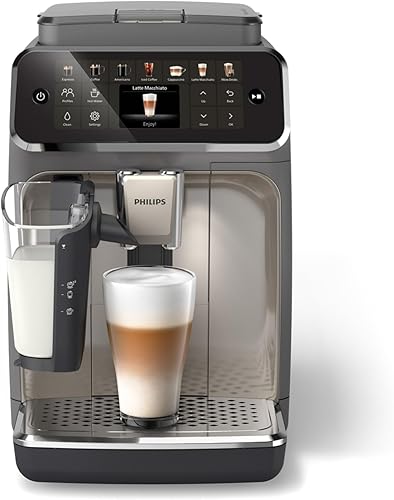
- 12 drink presets
- LatteGo milk system
- Up to 2 saved profiles
- QuickStart and SilentBrew
The 4400 keeps LatteGo and the quiet-brewing features while offering 12 presets. It makes sense if you want variety without the 5500's broader menu.
Pros
- 12 presets cover a range of hot and iced drinks
- Adjust strength, volume and milk level
- LatteGo has 3 parts and no internal tubes
- QuickStart and SilentBrew features
Cons
- Fewer presets than the 5500
- Supports up to 2 saved profiles
Pick the 4400 when you can name the extra choices you'll use beyond a basic six-drink menu, but don't need the 5500's full set. If the extra presets don't solve a specific need, a higher count by itself isn't a reason to choose it.
For wider brand context, compare Philips with another popular automatic-machine range in our De'Longhi vs Philips guide. It can help you decide which brand's approach fits your home before you settle on a model.
When does the 3300 make more sense?
The 3300 makes sense if six presets cover your usual drinks and you want LatteGo without paying attention to a much larger menu. Its listed choices include espresso, coffee, iced coffee, cappuccino, latte macchiato and hot water.
Philips 3300 LatteGo: Best for everyday favorites

- 6 presets
- LatteGo milk system
- AquaClean filter
- Adjustable strength, volume and milk level
The 3300 focuses on six familiar choices, including espresso, coffee, iced coffee, cappuccino and latte macchiato. It suits buyers who want a shorter menu and LatteGo.
Pros
- Six clear everyday choices
- Adjust strength, volume and milk level
- LatteGo has 3 parts and no internal tubes
- AquaClean filter with change prompts
Cons
- Fewer preset choices than the 4400 and 5500
- No saved profiles are specified in the available details
It also includes an AquaClean filter. Philips says changing the filter when prompted can mean up to 5,000 cups without descaling; treat that as a manufacturer claim, and follow the machine's prompts and care instructions.
The 3300 is a simpler match for a household with steady habits. If you regularly switch between many drinks or want saved profiles, compare it with the 5500 before deciding.
What should you check before choosing?
Start with your household's regular drinks and number of users, then compare menu size, saved preferences and milk-system cleanup. Those factors separate these three models more clearly than their shared LatteGo system.
Check the exact model and included instructions before buying. The product details identify the 5500 and 4400 as EP5544/94 and EP4444/90, respectively, and the 3300 as EP3341/50.
For the 5500, resolve the conflicting profile count before treating four profiles as a deciding feature. Philips' support site is a place to look for model-specific product help and manuals.
Also consider the rest of your coffee routine. A fully automatic machine grinds and brews at the push of a button, but you still need to refill, clean and maintain it as directed.
Who should choose the Philips 5500?
Choose the Philips 5500 if its wider menu and personalization will get regular use. Choose the 4400 if 12 options are enough, or the 3300 if six familiar choices cover your day.
The 5500 earns its place through 20 presets, LatteGo and profile options, with a profile-count detail to confirm. If you want the broadest selection here, it is the clearest fit; if you want fewer choices, compare the Philips 3300 and 5500 side by side before choosing.
Frequently asked questions
Is the Philips 5500 LatteGo worth it?
The 5500 is a good fit if you expect to use its 20 presets, adjustable strength, volume and milk preferences, or saved profiles. If you mostly make the same few drinks, the 3300 offers six presets with LatteGo, while the 4400 sits between them with 12.
Choose by the menu you will actually use.
How many drinks does the Philips 5500 make?
Philips describes 20 presets, including hot drinks such as espresso, coffee, lattes and cappuccinos, iced coffee and hot water. A preset count describes available selections, not necessarily 20 drinks your household will want.
Compare the options with your usual orders before giving the larger menu much weight.
How do you clean the Philips 5500 LatteGo system?
LatteGo has three parts and no internal tubes or hidden compartments. Philips says it can be rinsed clean in 10 seconds or placed in a dishwasher.
Rinse the milk components after use and follow the machine's instructions for the rest of its care; the milk system is only one part of upkeep.
Should you choose the Philips 5500 or 3300?
Choose the 5500 if its 20 presets and saved profiles matter to your household. Choose the 3300 if six options cover your routine and you prefer a shorter menu.
Both include LatteGo, so the main difference in these details is drink selection and personalization, not the milk system.