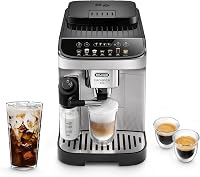
Fully Automatic Espresso Machine Buying Guide
A fully automatic espresso machine grinds beans and brews a drink with little manual work. Choose one by the drinks you make, milk setup, controls, cleaning needs, and counter space.
On this page (8 sections)
- How does a fully automatic espresso machine work?
- What should you compare before choosing one?
- Which fully automatic espresso machine features matter most?
- How much counter space does an automatic espresso machine need?
- What should you know about beans and ground coffee?
- What are the trade-offs of a fully automatic espresso machine?
- Which fully automatic espresso machine is a good fit?
- How do you choose a fully automatic espresso machine?
A fully automatic espresso machine grinds coffee and brews a drink with little manual work, often at the touch of a button. Compare its drink choices, milk setup, controls, cleaning routine, and footprint with the way you actually make coffee.
These machines can suit a daily routine where you want fresh-ground coffee without manually dosing and tamping each drink. They still need water, beans, and regular care, and the steps vary by model.
This guide explains what happens inside the machine and which features affect everyday use. For model suggestions, see our best fully automatic espresso machines and automatic espresso machines for home kitchens.
How does a fully automatic espresso machine work?
A fully automatic espresso machine grinds beans, measures a dose, and brews coffee through an internal brew unit. You select a drink, and the machine runs those steps according to its settings.
Most machines draw water from a tank and coffee beans from a hopper. The grinder turns beans into grounds, the brew unit compresses the dose, and hot water passes through it into your cup.
The result depends on the machine's settings and the beans you use. Many models let you adjust some combination of strength, volume, grind size, or milk amount.
A one-touch drink button does not mean every part of the routine is automatic. You still refill the tank and bean hopper, empty used grounds when prompted, and clean parts that contact milk or coffee.
What does “one touch” mean?
“One touch” usually means the machine starts a saved recipe from a button or display selection. You may still need to position a cup, add milk to a container, or make adjustments before brewing.
Recipe names also differ by model. One machine may offer a latte macchiato button, while another may focus on espresso and coffee.
Check the actual drink menu against the drinks you order most.
What should you compare before choosing one?
Choose a machine by the drinks you make most and the tasks you want it to handle. Start with recipes and milk preparation, then compare customization, cleaning, and fit.
| Feature | What to check | Why it matters |
|---|---|---|
| Drink menu | Espresso, coffee, iced drinks, or milk recipes | Built-in recipes can save repeated setup |
| Grinder | Grind settings and bean guidance | Adjustments help match different beans and tastes |
| Milk setup | Automatic carafe, detachable milk system, or wand | Changes both drink prep and cleanup |
| Controls | Buttons, display, and saved preferences | Affects how easily you repeat a drink |
| Cleaning | Removable parts and machine prompts | Defines the daily and periodic work |
| Dimensions | Width, depth, height, and access to tanks | The machine needs room to operate and refill |
A long recipe list is useful only if it includes drinks you want. A simpler machine may be a better fit if you mainly drink espresso or black coffee.
How many drinks do you need?
Choose a menu around your regular drinks, not the largest recipe count. Check whether the machine offers the specific options you want, including milk drinks, hot water, or iced coffee.
For example, the De'Longhi Magnifica Evo offers espresso, cappuccino, latte macchiato, iced coffee, coffee, hot water, and My Latte. The Jura E4 focuses on espresso, coffee, Ristretto, Café Barista, and Lungo Barista.
If a milk drink is a daily choice, compare how each machine makes and cleans milk foam. Our guide to automatic latte machines covers models built around one-touch milk drinks.
Does grinder adjustment matter?
Grind adjustment gives you a way to tune how beans are prepared. It can matter if you switch beans or want to adjust the taste, but the number of settings alone does not guarantee a preferred cup.
The Magnifica Evo has 13 grind settings and a conical burr grinder. The Philips 3300 lets you adjust drink strength and volume through its display.
Look for controls you will use. If you plan to keep one bean and one drink recipe, easy repeat settings may matter more than a large set of adjustments.
Which milk system fits your routine?
An automatic milk system can prepare foam as part of a recipe, while a wand leaves more of the milk preparation to you. Either way, milk residue needs cleaning after use.
The Philips 3300 LatteGo uses a three-part milk system without internal tubes or hidden compartments. Philips says it can be rinsed clean in 10 seconds or washed in a dishwasher.
The Magnifica Evo uses De'Longhi's LatteCrema system, which textures milk and milk alternatives. Its milk container can be stored in the fridge when not in use.
Choose based on how often you make milk drinks and how you prefer to clean their parts. Our De'Longhi milk frother cleaning guide walks through care for one common setup.
Which fully automatic espresso machine features matter most?
The most useful features are the ones that match your routine: drink controls, milk preparation, grinder adjustments, and accessible cleaning parts. Compare those details before paying extra for a long menu or advanced display.
Should you choose a machine with an automatic milk carafe?
Choose an automatic milk system if you regularly make cappuccinos or lattes and want the machine to handle more of the drink preparation. Check how the parts detach and whether the machine has a cleaning routine you will follow.
The Magnifica Evo offers a milk container that can be stored in the fridge when not in use, along with removable dishwasher-safe parts. The Philips 3300 LatteGo has a detachable three-part system with no internal tubes.
A wand can suit you if you prefer to prepare milk separately or make milk drinks less often. For a step-by-step drink example, see how to make a latte with a De'Longhi Magnifica.
Are more grind settings always better?
More grind settings provide more adjustment points, but they do not guarantee better results for every bean or drink. Consider whether you want to change settings and whether the controls are easy to reach.
The Magnifica Evo has 13 settings. The Jura E4 has a conical burr grinder and three coffee intensity levels, so it gives you a different kind of control.
Keep a note of a setting you like if your machine allows adjustments. Make one change at a time so you can tell whether it affects the cup.
What cleaning tasks should you expect?
Expect to rinse or wash parts that contact milk and follow machine prompts for coffee system care. The exact schedule depends on the model, water, and frequency of use.
Check whether the brew group is removable, whether milk parts can go in the dishwasher, and what the machine says about descaling. The Philips 3300 includes a removable brew group and guided descaling, and its AquaClean filter system is designed to reduce descaling needs when filters are changed as prompted.
Do not skip care because a machine has an automatic cleaning function. Read the instructions for its rinse cycles, removable parts, and descaling schedule.
Our espresso machine descaling frequency guide explains the factors that affect descaling intervals. If you have a Philips model, see how to use a Philips espresso machine for button and setup guidance.
How much counter space does an automatic espresso machine need?
Measure the machine's full footprint and the room needed to open, remove, or refill its parts. A machine can fit on the counter yet be awkward if the water tank or milk container cannot be reached.
The Philips 3300 measures 9.68 in deep, 17.04 in wide, and 14.6 in high. The Jura E4 measures 11 in deep, 17.6 in wide, and 13.8 in high.
The Magnifica Evo measures 19.53 in deep, 12.09 in wide, and 16.06 in high. The Gaggia Brera measures 10 in deep, 15.5 in wide, and 11.5 in high.
Compare dimensions in the same order the manufacturer provides, and check how the tank and hopper are accessed. Leave room to place a cup and remove any parts you need to wash.
The Gaggia Brera has an integrated grinder and a pannarello wand for frothing milk. Its drink options include espresso, espresso lungo, cappuccino, and latte.
What should you know about beans and ground coffee?
Most bean-to-cup machines are designed around whole beans, but some also accept pre-ground coffee. Check the manual for whether your model supports ground coffee and how to add it.
The Magnifica Evo's coffee input is ground coffee, while the Philips 3300 and Jura E4 are described for whole beans or beans. Input details vary, so avoid assuming that a machine supports both types.
For a De'Longhi example, our guide explains using ground coffee in a Magnifica. Follow the model's instructions to avoid putting coffee into the wrong compartment.
Bean choice also affects the grinder. Check the manual's guidance on oily or flavored beans before using them, since machines can have specific restrictions.
What are the trade-offs of a fully automatic espresso machine?
A fully automatic machine trades more convenience for more parts and maintenance than a basic manual setup. It can reduce the work of grinding and brewing, but it does not remove the need to clean and refill.
Potential benefits include:
- Grinding beans for each drink.
- Starting recipes from buttons or a display.
- Saving adjustments on some machines.
- Preparing milk drinks automatically on models with a milk system.
Potential trade-offs include:
- Counter space for the machine and access to removable parts.
- Regular cleaning of the brew path and milk components.
- A learning period to settle on settings and recipes.
- Less direct control over each brewing step than a manual machine.
If you enjoy adjusting each step yourself, a manual espresso machine may suit you better. If you want a repeatable button-led routine, an automatic model may be easier to fit into daily use.
Which fully automatic espresso machine is a good fit?
The right fully automatic espresso machine is the one whose drinks, controls, milk setup, and care needs match how you brew. These examples show different priorities rather than a universal ranking.
De'Longhi Magnifica Evo for a varied drink menu
The Magnifica Evo fits a household that wants several one-touch drinks, including milk recipes and iced coffee. Its My Latte option can save a personalized recipe.
The 13 grind settings give you room to adjust bean preparation. Removable dishwasher-safe parts support cleaning, and the LatteCrema system handles milk and milk alternatives.
Philips 3300 LatteGo for detachable milk parts
The Philips 3300 suits buyers who want several drink presets and a milk system made from three detachable parts. Its display adjusts strength, volume, and milk level.
Its menu includes espresso, coffee, iced coffee, cappuccino, latte macchiato, and hot water. The machine also has an AquaClean filter system, removable brew group, and guided descaling.
For more model options, see our Philips espresso machine guide.
Jura E4 for black coffee specialties
The Jura E4 suits a routine centered on black coffee drinks. It prepares five specialties, including espresso, Ristretto, Café Barista, and Lungo Barista.
Its controls use buttons and an intuitive symbol display. The machine has a conical burr grinder and three intensity levels.
Gaggia Brera for a wand-based milk routine
The Gaggia Brera suits buyers who want espresso and milk drinks with a pannarello wand. It offers espresso and espresso lungo, and can froth milk for cappuccinos and lattes.
Its controls use buttons, and the machine has an integrated grinder and removable tank. Review the manual before first use and confirm the setup and care steps fit your routine.
How do you choose a fully automatic espresso machine?
Choose a fully automatic espresso machine by matching its drink menu and milk setup to your daily routine, then confirm the cleaning tasks and counter fit. A long menu is useful only when it includes drinks you will make.
Pick the Magnifica Evo for a broad recipe menu and automatic milk drinks, the Philips 3300 for its detachable LatteGo system, the Jura E4 for black coffee specialties, or the Gaggia Brera for wand-based milk frothing.
For more options, compare our best fully automatic espresso machines. If upkeep is your next question, start with how often to descale an espresso machine.
Frequently asked questions
What does a fully automatic espresso machine do?
A fully automatic espresso machine handles key brewing steps, usually grinding beans, dosing coffee, and brewing a drink at the push of a button. Depending on the model, it may also prepare milk drinks or let you adjust drink strength and volume.
You still need to refill water and beans and clean the machine.
Is a fully automatic espresso machine the same as a super-automatic machine?
The terms are often used for machines that automate grinding and brewing from whole beans. Features vary, so check the specific drink buttons, grinder, milk system, and cleaning steps rather than relying on the label alone.
Some machines automate milk drinks, while others focus mainly on espresso and black coffee.
Do fully automatic espresso machines need special beans?
Most bean-to-cup machines are designed to grind whole coffee beans, but the allowed bean types and hopper guidance vary by model. Check the manual before using oily or flavored beans, since residue can affect the grinder and brewing path.
Some models also accept ground coffee, but that is not universal.
How often should you clean a fully automatic espresso machine?
Clean the parts and milk system at the intervals in your machine's manual, and follow its prompts for rinsing, descaling, and brew group care. Milk residue needs prompt attention after use.
For a general starting point, see our guide to how often to descale an espresso machine.
Can a fully automatic espresso machine make lattes?
Some fully automatic machines prepare milk drinks with an automatic milk system, while others use a steam wand or focus on black coffee. Check which recipes are built in and how the milk parts are cleaned.
A machine with one-touch milk recipes can reduce steps, but it still needs regular milk-system care.